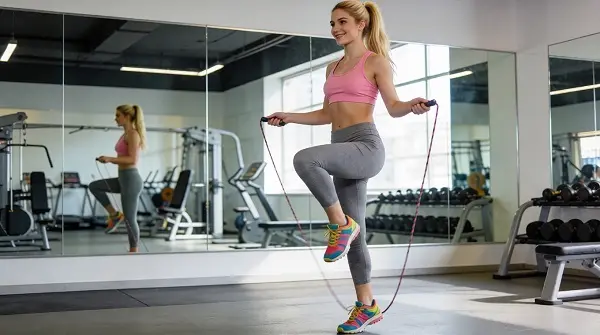
Once seen as a high-energy playground activity for kids, jump rope has evolved into a star in the fitness world—and for good reason. It’s simple to use, highly effective, and delivers a high-intensity workout that can be tailored to all fitness levels. Whether your goal is fat loss, improved endurance, or enhanced overall fitness, jump rope offers unbeatable value. No matter if you’re a fitness novice or a seasoned athlete, incorporating jump rope exercises into your routine will help you reach your fitness targets faster. Below, we’ll share curated jump rope exercises, a guide to choosing the right rope, and science-backed workout plans to kickstart your efficient jump rope journey.
1. The Fitness Benefits of Jump Rope
Jump rope is far more than just “hopping around”—it’s a full-body workout that engages multiple muscle groups, improves cardiovascular health, and burns a significant number of calories in a short time. Studies conducted by the American Council on Exercise (ACE) show that jump rope can burn 10-16 calories per minute. In comparison, running burns approximately 10-13 calories per minute, and cycling only 8-12 calories per minute. This makes jump rope a high-intensity, efficient fat-burning method, ideal for anyone looking to shed weight.
Additionally, jump rope enhances coordination, agility, and balance while strengthening your core, legs, and upper body. Whether you want to lose weight, boost fitness levels, or add variety to your workouts, jump rope has you covered.
2. 10 Top-Tier Jump Rope Exercises
Random jumping may burn calories, but structured training maximizes results, prevents boredom, and ensures continuous progress. Here are 10 jump rope exercises that you can flexibly integrate into your routine to maximize fat burning and comprehensively improve fitness.
1. Basic Jump
As the foundation of all jump rope movements, the Basic Jump is a must for beginners. The key is to jump over the rope with both feet together in a steady rhythm. Land softly on the balls of your feet to reduce impact on your joints.
- Technique Tips: Keep your elbows close to your body and use your wrists (not arms) to spin the rope; jump just high enough to clear the rope (about 1-2 inches off the ground); maintain an upright posture with slightly bent knees.
2. High Knees Jump Rope
Take the Basic Jump up a notch by driving your knees toward your chest with each jump. Even without the rope, high knees are a challenging exercise—adding the rope intensifies it further. This movement targets your core, hip flexors, and legs, and rapidly increases your heart rate.
- Technique Tips: Keep your back straight and core engaged; lift your knees as high as possible while maintaining a steady rhythm; alternate knee lifts in sync with the rope’s rotation.
3. Butt Kicks
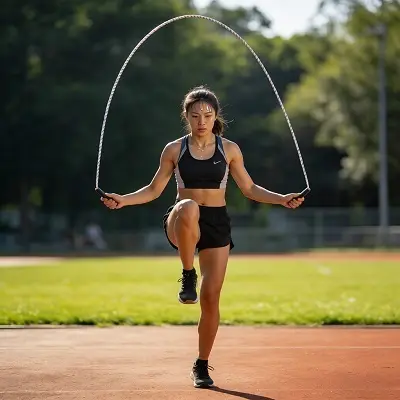
While jumping, kick your heels upward toward your glutes. This exercise improves flexibility and coordination, primarily works the hamstrings and glutes, and serves as an excellent warm-up before more intense workouts.
- Technique Tips: Keep your chest up and core tight; focus on quick, light jumps rather than height; maintain a steady pace for smooth transitions between kicks.
4. Double Unders
An advanced move, Double Unders require the rope to pass under your feet twice with each jump. This exercise demands precise timing, speed, and coordination, making it a great challenge for experienced jumpers.
- Technique Tips: Jump slightly higher than you would for a Basic Jump; spin the rope quickly using your wrists; keep jumps consistent and controlled to avoid tripping.
5. Crossover Jumps
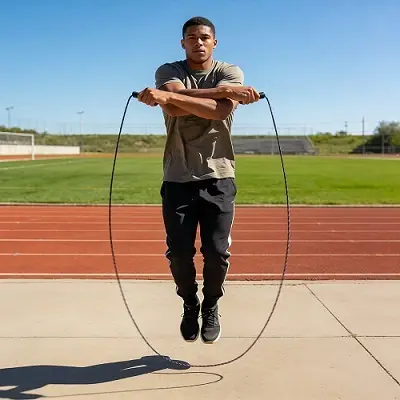
Add an arm-crossing motion to your jumps to boost coordination and agility. Cross your arms in front of your body as you jump, then return to the starting position on the next jump.
- Technique Tips: Master the Basic Jump rhythm first before adding the crossover; keep your elbows close to your body during the cross; focus on timing to ensure the rope clears your feet each time.
6. Side-to-Side Jumps
Jump from side to side while skipping to target your lateral muscles and improve agility. This exercise enhances balance and coordination while delivering a dynamic cardio workout.
- Technique Tips: Shift your weight from side to side with each jump; keep movements small and controlled to maintain balance; transition smoothly between sides without losing rhythm.
7. Single-Leg Hops
Jump on one leg while keeping the other leg raised, switching legs after each set. This exercise effectively improves balance, stability, and lower-body strength.
- Technique Tips: Engage your core and keep your gaze forward; land softly on the ball of your foot to minimize impact; start with a few hops per leg and gradually increase to build endurance.
8. Boxer Step
Mimic the footwork of boxers in training by shifting your weight quickly between feet while jumping. This light, rapid movement improves coordination and endurance while boosting leg power.
- Technique Tips: Stay light on your feet and maintain a quick, rhythmic pace; shift weight smoothly between feet; keep your hands close to your body and minimize arm movement.
9. Skiers
Jump side to side with your feet together, imitating the motion of skiing. This exercise targets the lower body and engages the core, making it a great addition to cardio-focused workouts.
- Technique Tips: Keep your feet together as you jump laterally; engage your core to stabilize your body; start with small jumps and gradually increase lateral movement as you gain confidence.
10. Criss-Cross
Another advanced exercise that challenges coordination, Criss-Cross involves crossing and uncrossing your arms with each jump, requiring precise timing and agility.
- Technique Tips: Begin with a steady Basic Jump before attempting the criss-cross; time your arm crosses correctly to avoid tripping; practice the arm movement without the rope to build muscle memory first.
3. How to Choose the Right Jump Rope
While any rope works in a pinch, selecting the right one significantly enhances workout effectiveness and reduces injury risk. Here are key factors to consider:
1. Length
The rope should be proportional to your height. When standing in the middle of the rope, the handles should reach your armpits. A rope that’s too long or too short disrupts rhythm and makes jumping harder.
2. Weight
Rope weight impacts workout intensity. Lightweight ropes are ideal for speed and agility exercises, while heavier ropes provide resistance to build upper-body endurance. Beginners should start with a medium-weight rope before progressing to heavier options.
3. Material
Jump ropes are made from various materials, including PVC, nylon, leather, and steel cable. PVC and nylon ropes are lightweight and suitable for speed training, while leather and steel cable ropes are more durable and offer a more challenging workout due to their heavier weight.
Recommendations for Different Fitness Levels
- Beginners: Opt for a lightweight, easy-to-handle basic PVC or nylon rope. Master Basic Jumps first and gradually introduce more complex exercises as you build confidence.
- Intermediate: Upgrade to a medium-weight leather or thick PVC rope. Incorporate exercises like High Knees and Double Unders to increase intensity.
- Advanced: For seasoned jumpers, a weighted rope or steel cable rope adds resistance to challenge strength and endurance. Experiment with advanced moves like Crossover Jumps and Criss-Cross to push your limits.
4. Recommended Jump Rope Workout Routines
Customize your jump rope workouts based on your fitness goals and time constraints. Here are 3 classic plans to try:
1. High-Intensity Interval Training (HIIT)
HIIT alternates between intense exercise and short rest periods. A jump rope HIIT routine: Perform high-intensity moves like Double Unders or High Knees for 30 seconds, rest for 15 seconds, and repeat the cycle for 20-30 minutes for maximum fat burning.
2. Circuit Training
Combine jump rope with other bodyweight exercises for a full-body workout. Example circuit: 1 minute of Basic Jumps → 1 minute of push-ups → 1 minute of Side-to-Side Jumps → 1 minute of squats. Rest for 2 minutes, then repeat 3-4 cycles to balance cardio and strength training.
3. Interval Movement Training
Alternate between different jump rope exercises to target various muscle groups and avoid boredom. Example: 1 minute of High Knees → 1 minute of Butt Kicks → 1 minute of Single-Leg Hops, rest for 1 minute, and repeat for 15-20 minutes to comprehensively boost fitness.
5. Practical Tips to Boost Jump Rope Workout Results
1. Progress Gradually
As your endurance improves, extend the duration of each exercise or total workout time; add complex moves like Double Unders or Criss-Cross to challenge coordination; use a weighted rope or ankle weights to increase resistance; shorten rest periods between exercises to maintain a higher heart rate and burn more calories.
2. Maintain Proper Form
Proper form is key to maximizing results and preventing injury: Keep elbows close to your body, relax your wrists, and use wrist power to spin the rope; bend your knees slightly to absorb impact; stand upright, engage your core, and keep your gaze forward.
3. Fuel Your Body Appropriately
To maximize workout results, proper nutrition before and after exercise is crucial. Fueling up pre-workout and repairing muscles post-workout helps your body recover faster and make steady progress. Choosing the right sports nutrition supplements can support your performance and recovery.
A simple jump rope delivers a highly effective full-body workout. Master proper techniques, select the right equipment, follow a science-backed plan, and stay consistent—you’ll soon achieve your desired physique and optimal fitness. Grab your jump rope and start your fat-burning, strength-building journey today!